The Department for Work and Pensions (DWP) National Insurance Number (NINo) data includes individuals aged 16 and over who have the right to work and/or claim benefits. This dataset captures both short- and long-term migrants and reflects inflow only, not the total migrant population.
Contents
- Our vision
- What is migration
- Why this strategy matters
- Recognising shared needs
- Key challenges
- 1. Limited understanding of rights, entitlements, and responsibilities and opportunities
- 2. Barriers to accessing services and systems
- 3. Barriers to effective communication
- 4. Knowledge, information, and communication to make informed choices
- Our values
- Our Priorities
- Key Deliverables
- Priority 1 – Make it easier for people to get help
- Priority 2 – Help people understand and connect
- Priority 3 – Help communities grow and lead
- Priority 4 – Work together for better results
- Strategic Alignment: One City, Shared Goals
- How the Leeds Migration Strategy Supports Other City Strategies
- Governance and Partnerships
- Strategic Oversight
- Strategic Coordination
- Leeds Strategic Migration Board
- Leeds Migrant Health Board
- Leeds Migration Partnership
- City of Sanctuary and Local Authority of Sanctuary
- Leeds Intercultural Cities Network
- Trusted Pathways: The role of the Third Sector in migrant support
- The Leeds communities
Foreword
Migration is a global reality driven by conflict, climate change, and the pursuit of opportunity. In Leeds, we meet this reality with compassion, purpose, and pride. As an awarded member of the City of Sanctuary Local Authority Network, we are committed to creating a culture of welcome, inclusion, and support for people seeking sanctuary and for all communities who call Leeds home.
Over the past decade, Leeds City Council has developed a robust migration programme aligned with the strategic objectives of the city. Migration is not a standalone issue; it touches nearly every part of city life. It intersects with housing, health, education, employment, community safety, and more. That’s why this strategy is designed to work across departments, sectors, and strategies. We recognise that access to services, safety, and wellbeing are fundamental to successful integration and community cohesion. That’s why this strategy focuses on practical, inclusive actions that improve outcomes for individuals while strengthening the fabric of our communities.
Leeds City Council recognises the vital role of the third sector in supporting people with lived experience of migration. Voluntary, community, and faith organisations are often the first and most trusted support for new arrivals. We are committed to endorsing and supporting funding initiatives that align with our strategic priorities, helping to unlock resources that strengthen the capacity of the sector and ensure that people across the diverse communities of Leeds are able to reach their full potential.
We also recognise that not all residents in Leeds have the right to vote, yet their voices are no less important in shaping our city’s future. People seeking sanctuary and with lived experience of migration contribute to our communities, our economy, and our shared future and their views deserve to be heard. This strategy reflects our commitment to inclusive decision making, ensuring that those who are excluded from formal democratic processes still have meaningful opportunities to shape the policies and services that affect their lives. By listening to lived experience and working in partnership with trusted organisations, we are amplifying voices that are too often overlooked.
Success is about shifting the narrative and challenging misinformation and harmful stereotypes, as well as celebrating the positive contributions of people from all backgrounds. Everyone in Leeds should feel proud of the city’s role in fostering belonging and inclusion.
We would like to take this opportunity to extend our heartfelt thanks to all staff, partners, and volunteers working across the city. Your continued passion and unwavering commitment to serving both new and settled communities is truly inspiring. Your efforts help build a more inclusive, welcoming, and supportive environment for everyone, and we are deeply grateful for the vital role you plan in making our city a better place for all.
This strategy is not just a policy document, it is a commitment to action. It has been shaped by the voices of people with lived experience, frontline organisations, and community leaders. Together, we have built a shared vision for a city where everyone feels safe, welcome, and is able to build their lives with dignity, knowing they belong to a city that values inclusion, diversity, and opportunity. Together, we will continue to listen, learn and act, so that Leeds remains a place of opportunity, dignity and belonging for all.
Councillor Emma Flint
Executive Member for Equality, Health and Wellbeing
Our vision
Leeds is a welcoming, compassionate, and inclusive city, a place where all people, whether newly arrived or settled, feel safe and connected. A city where contributions are valued and celebrated, and where individuals, families, and communities belong and can reach their full potential.
What is migration
This strategy adopts a broad and inclusive understanding of migration, recognising the many ways people move and settle. It encompasses all forms, voluntary and forced, long-term and short-term and acknowledges a wide range of motivations, including economic, safety and security, education, to join family, and personal aspirations.
Within the context of this strategy, we refer to:
- new communities: people who arrived in the UK from another country within the last 10 years
- settled communities: people who have lived in the UK for more than 10 years
We also recognise that some people:
- may become established more quickly than 10 years
- who have lived in the UK for over 10 years may still share experiences with those who have newly arrived, depending on their circumstances
Why this strategy matters
Leeds is proud of its identity as a diverse, welcoming, and forward-looking city. It has a long history of embracing people from all backgrounds, and its communities are enriched by the cultures, skills, and experiences of those who have made Leeds their home. However, despite this strong foundation, newly arrived and migrant communities continue to face complex and intersecting challenges that can hinder their ability to settle, have a sense of belonging and to thrive. These challenges cut across immigration status, equality characteristics, and areas of need, and addressing these is central to the purpose of this strategy. These complexities also span across critical areas such as housing, employment, education, health, and access to services. For many, navigating these systems can be overwhelming, especially when compounded by trauma, isolation, or discrimination.
This strategy matters because it seeks to reduce these inequalities. It recognises that belonging is not a one size fits all process, and that meaningful inclusion requires intentional, coordinated action across sectors. It is about creating a city where everyone, regardless of where they come from or how they arrive, feels safe, connected, and able to contribute.
By centring the voices of people with lived experience and working in partnership with services, this strategy aims to build a more compassionate and responsive system. It sets out a shared vision and practical steps to ensure that Leeds continues to be a place of opportunity, belonging, and dignity for all.
Recognising shared needs
People who come to Leeds to work, study, join family, or seek sanctuary aspire to establish their lives quickly and successfully. To understand how the city can best support these aspirations, research and analysis have helped identify the key needs that individuals and communities seek to fulfil. Those arriving in Leeds hold a wide range of immigration statuses, each with different rights and restrictions, and they reflect diverse equality characteristics that bring both opportunities and challenges. These varied experiences and perspectives are essential in shaping a more effective and inclusive citywide response to migration.
The key areas of need shared across immigration statuses and equality strands include access to:
- Housing
- Employment and financial stability
- Health and wellbeing
- Education and English language support
- Advocacy, advice, and legal services
- Safety, belonging, and social support networks
- Basic essentials during times of hardship
While the needs of new communities are broadly similar to those of established communities, the challenges they face, and the support required can differ significantly. It is also important to recognise that ‘need’ is not static; it evolves with life circumstances.
New communities bring significant strengths and resilience in meeting these needs. Equally, the support provided by communities themselves, alongside wider community and faith groups, the voluntary sector, and service providers, plays a vital role in enabling people to access the help they need.
This approach recognises the strengths and assets within communities alongside the challenges and pressures that can increase vulnerability.
Migrant definitions
This is a list of some categories and examples, it is not intended to be an exhaustive list.
Economic migrant
A person who moves to another country primarily for work or improved economic opportunities, usually through a visa route linked to employment or skills.
Why this matters locally: Economic migrants contribute to the local workforce and economy but may face barriers around housing, skills recognition, and access to services.
Family joiners
People who come to the UK to join close family members who already have lawful immigration status.
Why this matters locally: Family stability supports integration, wellbeing, and community cohesion.
International students
People who come to the UK on a time limited visa to study at a recognised education provider.
Why this matters locally: International students support the local economy and cultural life, and may need advice on housing, work rights, and transitions after study.
No recourse to public funds (NRPF)
A condition that applies to some immigration routes that prevents access to most welfare benefits and housing assistance.
Why this matters locally: NRPF can increase the risk of destitution and create pressures on local services and safeguarding systems.
People seeking asylum
People who have applied to the UK for protection because they fear persecution or serious harm and are awaiting a decision.
Why this matters locally: Asylum accommodation, health access, and community integration have direct local impacts.
Refugees
People who have been granted protection in the UK and have permission to stay because they cannot safely return to their country of origin.
Why this matters locally: Refugees are entitled to work and access services, and in some cases such as UK Resettlement Programme benefit from coordinated support to settle and integrate.
Refused asylum seekers
People whose asylum claim has been refused and who may be appealing, seeking other leave to remain, or expected to leave the UK.
Why this matters locally: This group may face significant hardship and safeguarding risks and have limited access to support.
Trafficked person
Someone who has been exploited through force, deception, or coercion, including for labour, sexual exploitation, or criminal activity.
Why this matters locally: Identification and support of trafficked people is critical for safeguarding and crime prevention and to help people rebuild their lives.
Undocumented migrants
People living in the UK without a current regular immigration status. This could be due to entering the UK without permission, overstaying a visa, or administrative or financial difficulties with maintaining status.
Why this matters locally: Undocumented migrants may be reluctant to access services, increasing risks to health, safety, and community wellbeing.
Key challenges
Ongoing learning has identified four key cross-cutting challenges that impact both newly arrived and long-established communities with lived experience of migration. These barriers consistently affect people across all immigration statuses, equality characteristics, and areas of need.
1. Limited understanding of rights, entitlements, and responsibilities and opportunities
Many people face significant difficulty navigating complex immigration systems and may not be aware of their legal rights or responsibilities. Likewise, service providers often lack access to clear guidance and resources, which can result in inconsistent support and missed opportunities for early intervention.
Restricted access to immigration legal advice
Access to qualified immigration legal advice is a critical need in Leeds, yet provision remains severely limited due to:
- a national decline in legal aid, especially for immigration and asylum cases
- a shortage of accredited legal advisors and regulated providers in the region
- complex and frequently changing immigration rules requiring specialist expertise
No recourse to public funds (NRPF) in Leeds
NRPF, a restriction attached to many immigration statuses, prevents individuals from accessing vital welfare benefits and housing support. This policy disproportionately affects some of the most vulnerable members of our communities, placing them at heightened risk of poverty, homelessness, and exploitation. The impact of NRPF is far-reaching, affecting a wide range of residents.
The third sector has played a pivotal role in exposing the challenges of NRPF. Their advocacy, grounded in lived experience, has been instrumental in prompting action. In response, Leeds City Council established a dedicated No Recourse to Public Funds Task and Finish Group. This cross-departmental initiative brings together council services to:
- review and improve internal pathways for those affected
- coordinate responses across departments to avoid duplication and gaps
- develop clear guidance and training for frontline staff
- strengthen partnerships with third sector organisations to ensure policy is informed and responsive through lived experiences
This work calls on all services to reflect deeply on how they uphold dignity in practice and challenges us to go further: to ask what more can be done, what systems can be improved, and how we can collectively ensure that the most vulnerable people are not excluded from safety because of their immigration status.
2. Barriers to accessing services and systems
Many people with lived experience of migration face significant barriers when trying to access the services and support they need.
Limited awareness and understanding of services
There is often reduced knowledge about what services exist, what support is available, and how to access it. This is compounded by a lack of confidence and trust in whether services will be delivered in a culturally sensitive and inclusive way.
Negative experiences with services
Poor customer service and unwelcoming or uninformed staff interactions can discourage individuals from seeking help or returning for support.
Ineffective signposting and navigation
People unfamiliar with local systems and entitlements often struggle to navigate services. Signposting is frequently unclear or disconnected from the lived realities of those trying to access help.
Digital exclusion
More services are increasingly delivered online.
These challenges highlight the need for more accessible, culturally competent, and person-centred service design, alongside stronger collaboration with communities to build trust and improve navigation through the system.
3. Barriers to effective communication
Effective communication is fundamental to accessing services and building a sense of belonging.
Language barriers
A lack of English fluency and in some cases, literacy in any language can make it difficult for individuals to:
- access healthcare, housing, education, and employment
- understand legal rights, entitlements, and responsibilities
- navigate everyday systems such as transport, schools, and benefits
While interpretation and translation services are essential, they are often:
- unavailable in less commonly spoken languages
- unaffordable for smaller organisations or individuals
- inconsistently provided across services
This inconsistency contributes to confusion, unequal access, and missed opportunities for early support and intervention. Addressing language barriers is key to building trust, reducing inequalities, and enabling all residents to engage fully with life in Leeds.
Digital exclusion
Digital exclusion has become a major barrier for many communities. Key challenges include:
- limited access to devices and reliable internet, especially for newly arrived individuals or those in temporary accommodation
- low levels of digital literacy, particularly among adults or those with disrupted educational backgrounds
- language barriers, as many digital platforms lack multilingual accessibility
These issues can result in missed appointments, difficulties applying for jobs or benefits, and increased social isolation. Tackling digital exclusion is essential to ensuring equitable access to services and fostering inclusion across all communities.
Cultural and systemic misunderstandings
Even when English is spoken or when an interpreter is present, there is a contextual and cultural nuance, understanding or unfamiliarity with UK systems which can lead to miscommunication. For example:
- not knowing how to register with a GP or school
- not knowing how to report a crime or seek help
- feeling intimidated or unwelcome in formal/unfamiliar settings
- being unfamiliar with UK institutions, services and organisations
- limited Knowledge, Information, and Communication to make informed choices
The barriers outlined above significantly limit the ability of newly arrived individuals and people with lived experience of migration to make informed decisions. This highlights the needs for:
- better access to advocacy, advice, and legal support
- stronger, trusted social networks that share accurate and timely information
- improved ability to navigate local services, systems, and the city itself
4. Limited knowledge, information, and communication to make informed choices
The barriers outlined above significantly limit the ability of newly arrived individuals and people with lived experience of migration to make informed decisions. This highlights the needs for:
- better access to advocacy, advice, and legal support
- stronger, trusted social networks that share accurate and timely information
- improved ability to navigate local services, systems, and the city itself
Voice and influence
People with lived experience of migration often face barriers to shaping the services they use and influencing decisions that affect their lives. Key issues include:
- lack of awareness and understanding of decision-making processes, which prevents active participation
- limited opportunities for meaningful community engagement, where voices are heard and valued
- insufficient feedback loops, making it difficult for communities to see how their input has influenced change or been taken into account
Strengthening voice and influence is essential to building trust, improving service design, and ensuring that policies reflect the lived realities of diverse communities.
Our values
This strategy is built on a set of shared values that guide how we work, who we work with, and the impact we collectively aim to achieve.
We start with people
Our approach is rooted in a can-do attitude. Rather than focusing on barriers, we focus on solutions, working creatively and collaboratively to find ways to connect people with the support they need.
We prioritise safety and wellbeing
We place safety and wellbeing at the heart of everything we do. We aim to create environments where people feel safe, respected and genuinely supported.
We take decisive and effective action
We listen, we learn, and we act, leading to meaningful, positive results. Guided by empathy, equity and a belief everyone deserves dignity, respect, and the opportunity to thrive.
We facilitate voice and influence
We believe that people should have a voice in the decisions that impact their lives. By creating space for lived experience to shape services and systems, we ensure that our approach is not only inclusive but also more effective, accountable, and rooted in real-world insight.
Our priorities
Through consultation and strategic review, communities, partners, and stakeholders have reaffirmed that the core priorities of the Migration Strategy remain both relevant and vital in today’s changing landscape. These priorities reflect the lived experiences, aspirations, and challenges faced by people who have made Leeds their home.
Building on this insight, Leeds will continue to champion an inclusive, compassionate, and forward-thinking approach focusing on the following priority areas.
Key deliverables
Overarching key deliverables:
We will focus on what really matters:
- treat everyone with kindness, fairness and respect
- make information and support easy to find and understand
- help people feel safe, included, and in control of their future
- improve services by working with communities, not just for them
- make sure English learning and digital tools are available to everyone
Priority 1 – make it easier for people to get help
What we will do
- make it easier for people to find and use the services they need
- help services work better and more efficiently
- make sure services are welcoming, inclusive, and caring
- help people understand their rights, what support they can get, and what’s expected of them
- communicate clearly so everyone understands
- involve people with real-life experience in improving services
How we will do It
- create a culture where everyone is treated with dignity, respect, and kindness
- use clear and easy-to-understand information
- help people who may be unfamiliar with the city to find the support they need
- find inclusive ways to listen to what people need and how they feel about services
- work with other organisations to make services better, more responsive, and open to everyone
- help more people feel confident using digital tools and services
Priority 2 – help people understand and connect
What we will do
- build a city culture that is welcoming and caring
- help people learn more about different communities, the value they bring, and the challenges they face
- encourage strong, positive relationships between people from all backgrounds
- challenge discrimination and promote equality, equity and inclusion
- tackle false or misleading information
How we will do It
- give people and communities the knowledge and skills they need to succeed
- create more chances for people from different backgrounds to meet, talk, and come together
- train staff so they can meet the needs of diverse communities,
- support fair hiring, career growth, and inclusive, welcoming workplaces
- learn from and promote the City of Sanctuary movement
Priority 3 – help communities grow and lead
What we will do
- start by listening to people and involving them in creating solutions
- support individuals and communities to become stronger, more skilled, and better connected
- make sure community members have a say in decisions that affect them
How we will do It
- build strong relationships and understanding of communities and community assets
- focus on people’s strengths and value ideas and experiences
- work together with communities to create ways to build social connections and make the most of local resources
- provide people, groups, and organisations with the tools, support, and knowledge they need to grow, thrive, and respond to challenges
- help more people improve their English, get online, and access learning opportunities
Priority 4 – work together for better results
What we will do
- involve people with real-life experience and support services in shaping decisions and how services are delivered
- team up with partners to understand needs, improve access to help, and find local solutions
- strengthen local infrastructure, networks and partnerships for better outcomes
How we will do It
- embed migration as a cross-cutting theme in all citywide plans and strategies
- participate or lead projects and networks that support the goals of the migration strategy and priorities
- build stronger local support systems by sharing resources, offering peer support, and working together
- design services and solutions together, with input from all involved, especially those with lived experience
Strategic alignment 'one city, shared goals'
Leeds has proudly embraced its role as a City of Sanctuary, welcoming people who have been displaced by war, persecution, and hardship. Over the past decade, the city has responded to national and global challenges by supporting a wide range of immigration routes, including asylum, resettlement, family reunion and skilled migration schemes. This work has been made possible through strong leadership and partnerships and active community involvement. Together, services across Leeds and third sector organisations deliver meaningful support and create real impact.
Our strategic, coordinated and inclusive approach to migration in Leeds is rooted in the Leeds Ambitions, and reflects the city’s commitment to being healthy, growing, thriving and resilient. The Leeds Migration Strategy is designed to support people who migrate to Leeds to settle quickly, access opportunities, and contribute to the life of the city.
We continue to work closely with partners to shape and strengthen this approach, adapting to changes in legislation, national schemes, and the evolving impact of global events. Our shared aim is to ensure that migration positively benefits all residents, enhances community resilience, and supports the wellbeing and growth of the city as a whole.
Healthy
The Migrant Health Board, reporting to the Health and Wellbeing Board plays a key role in tackling health inequalities. This board is closely aligned with the Leeds Strategic Migration Board and the Leeds Migration Partnership. Health partners are also engaged with the sanctuary movement.
Growing
The funding landscape for migrant employment and skills support is undergoing significant change, with the conclusion of long-standing programmes such as New Roots and Connecting Opportunities leaving notable gaps in provision. While Leeds City Council continues to invest in inclusive employment pathways through its hubs and commissioned third sector initiatives, the shift from comprehensive, long-term models to shorter-term, narrowly targeted schemes has impacted service continuity. This is particularly challenging for newly arrived migrants and asylum seekers, who face barriers to accessing tailored support. Through coordinated approaches, including the Migrant Employment Working Group, we are working to influence future investment and optimise the use of limited resources.
Thriving
As part of the city’s commitment to being a compassionate city that reduces poverty and inequality, Leeds fosters an inclusive and welcoming environment. Through clear communication, community engagement, and safe access to services, the city ensures that all residents regardless of status feel supported and valued. This approach not only enhances wellbeing but strengthens trust and resilience across communities.
Resilient
As climate change continues to reshape global migration patterns, Leeds must prepare for the arrival of individuals and families displaced by environmental crises. People migrating from regions facing drought, flooding, or food insecurity, are likely to arrive with complex health and wellbeing needs. Horizon scanning by Migration Yorkshire and others suggests that climate migration will become a more prominent feature of urban life in the UK.
How the Leeds migration strategy supports other city strategies
The Leeds Migration Strategy connects with several other city-wide plans. These links are important because many of the challenges faced by people with lived experience of migration such as housing, safety, health, and belonging cut across different areas of work.
Stronger Leeds Strategy
Stronger Leeds Strategy is essential to the Migration Strategy because cohesion and belonging are at the heart of successful integration. As Leeds becomes more diverse, it’s vital to create safe spaces for dialogue, build trust between communities, and promote positive relationships in our neighbourhoods. This strategy helps ensure that all residents feel safe, valued, and connected, which is key to building a welcoming and resilient city.
Leeds Hate Crime Strategy
Leeds Hate Crime Strategy plays a vital role in supporting the aims of the Migration Strategy. It is essential to ensure that all communities feel safe, respected, and valued. This strategy is important because hate incidents can undermine integration, erode trust, and create barriers to participation in civic life. The strategy focuses on strengthening community engagement, celebrating diversity and improving pathways to reporting. Together, these strategies ensure that Leeds is not only a diverse city, but also a safe and cohesive one, where everyone has the opportunity to thrive.
Leeds Third Sector Strategy
Leeds Third Sector Strategy recognises the essential role that voluntary, community, and faith organisations play in supporting the wellbeing of the city’s residents. This is especially important in the context of migration, where trusted, grassroots organisations are often the first point of contact for new arrivals. These organisations provide culturally appropriate support and advocacy, language and orientation services and safe spaces for connection, belonging, and empowerment. By encouraging the city to better understand, support, and work in partnership with the third sector, this strategy strengthens the infrastructure needed to help migrant communities settle, integrate, and thrive. The Third Sector Strategy is not just complementary to the Migration Strategy, it is foundational to its success.
Leeds Volunteering Strategy
Leeds Volunteering Strategy aims to make Leeds the best city for volunteering by promoting inclusive, accessible, and flexible opportunities. In the migration context, volunteering is a powerful tool for integration helping migrants build social networks, gain skills, and contribute to their communities. The strategy recognises and seeks to remove barriers that migrants often face, such as complex processes and lack of tailored support. It supports organisations in engaging diverse volunteers, including those with lived experience, enhancing service relevance and impact. Overall, it reinforces the third sector’s role in building a more inclusive, resilient, and connected Leeds.
Leeds ESOL Strategy
Leeds ESOL (English for Speakers of Other Languages) Strategy is vital to the Migration Strategy because language is the foundation of integration. Access to high quality, coordinated English learning enables migrants to participate in community life, access services, and progress in education and employment, all of which are essential for building a cohesive and inclusive city.
Digital Leeds Strategy
Digital Leeds Strategy is a key enabler of the Migration Strategy because digital inclusion is essential for social inclusion. As more services, opportunities, and information move online, ensuring that migrants have the skills, access, and confidence to engage digitally is critical. This strategy helps reduce barriers to healthcare, education, employment, and civic participation supporting migrants to thrive and contribute fully to a digitally connected, inclusive city.
Collectively, these strategies respond to common challenges such as inequality, access to services and social cohesion, impacting people with lived experience of international movement as well as the wider community.
Governance and partnerships
At the heart of our work is the Leeds Ambitions and the “Team Leeds” vision for a healthier, more inclusive and sustainable city. Team Leeds is about collective action to make Leeds the best it can be. It emphasises genuine partnership working, shared learning, and creative use of resources to deliver on common goals. By bringing together residents, workers, and city champions both locally and globally, Team Leeds fosters a united response to challenges and opportunities. This collaborative spirit is especially vital in times of economic pressure, enabling the city to tackle complex issues and adapt to future demands through shared ambition and resilience.
Strategic oversight
Leeds City Council Executive Board
Provides political leadership, strategic direction, and final approval of key decisions and policies related to migration.
Leeds City Council Scrutiny Board (Communities)
The role of this board is to hold the Executive to account, reviews the effectiveness of migration-related policies, and ensures transparency and accountability.
Strategic coordination
Leeds Strategic Migration Board
The Leeds Strategic Migration Board serves as the city’s central governance body for managing migration, ensuring a coordinated, inclusive, and strategic approach to migration-related issues across Leeds. Chaired by the Chief Officer for Safer Stronger Communities, the board brings together a wide range of stakeholders, including representatives from Leeds City Council departments (such as Housing, Adults and Health, Children and Families, Education and Employment and Skills), statutory partners like the Integrated Care Boards, West Yorkshire Police, and the Department for Work and Pensions, as well as service providers such as Mears and Migrant Help.
Strategic input is also provided by the migrant third sector - Leeds Migration Partnership and Migration Yorkshire, which offers national policy insight and local service considerations. Political representation is ensured through the Executive Board Member for Equality, Health and Wellbeing.
The board’s core functions include facilitating and coordinating migration related activities across the city, promoting integration, addressing migration challenges through collaboration, and driving thematic discussions to improve outcomes and service delivery. It also plays a key role in reporting to strategic boards and influencing city-wide decision-making.
Leeds migrant health board
The Leeds Migrant Health Board’s purpose is to significantly improve health outcomes for Leeds migrant communities by providing a strategic, citywide approach to understanding and addressing migrant health needs in Leeds. Its current priorities focus on communication, access, and work and austerity.
The board works collaboratively across the health system to identify and address the key issues that create inequalities in health between our migrant population and the rest of the population of Leeds. It comprises partners, including the NHS, local authority and voluntary and community partners, including organisations who work directly with people seeking asylum and refugees.
Leeds migration partnership
The Leeds Migration Partnership is led by the migrant third sector with facilitation support provided by Leeds City Council Migration and Third Sector team. Leeds Migration Partnership brings together organisations, groups, volunteers and individuals to meet, think and share information to support partnership working. Key to their approach is ensuring the voices of migrants are heard and influence decision makers.
City of sanctuary and local authority of sanctuary
Leeds is proud to be a City of Sanctuary as part of a national movement to build a culture of welcome for people seeking sanctuary in the UK. Leeds City Council is an awarded member of the City of Sanctuary Local Authority Network, embedding good practice across the council and working collaboratively with sanctuary streams including the University of Sanctuary, Colleges of Sanctuary Libraries of Sanctuary, Integrated Health Board of Sanctuary, Theatres of Sanctuary and Schools of Sanctuary.
Leeds intercultural cities network
In 2019, Leeds joined the Intercultural Cities Network (ICC) a Council of Europe initiative which encourages cities to develop policies that build on the advantages of diversity and encourage diverse communities to build bridges and bonds between each other. Through membership of the network, Leeds was able to benefit from an in-depth analysis (ICC Index Report) Leeds, United Kingdom - Intercultural City (coe.int) of inter-culturalism in the city across several key indicators such as education, neighbourhoods, public services, business, culture, commitment, and public space. The development of the Leeds's work with the ICC Programme is ongoing linking to the offer of international benchmarking, peer learning and support for intercultural policy development.
Trusted pathways: the role of the third sector in migrant support
Migrant communities often encounter persistent and complex barriers when accessing mainstream services. These services may not be adequately equipped to respond to the specific needs of migrants, particularly in relation to immigration status, language barriers, cultural differences, and experiences of marginalisation. As a result, many essential services remain hard to reach for these communities, either due to systemic exclusion or a lack of tailored provision.
In contrast, third sector organisations play a critical role in bridging these gaps. They offer more accessible, trusted, and culturally responsive support, often acting as intermediaries that help migrants navigate and engage with public services. These organisations are uniquely positioned to build trust, provide holistic support, and advocate for individuals whose needs are not met by mainstream systems.
Articulating the gap involves recognising the limitations of mainstream services in reaching and serving migrant populations effectively and highlighting the value of third sector organisations in filling these voids. It also requires a commitment to collaborative approaches that integrate the strengths of both sectors, ensuring that no one is left behind due to structural or systemic barriers.
The Leeds community
Between the 2011 and 2021 Census, the Leeds population grew by 8.1% from 751,500 to 811,950. By 2025, the office for national statistics estimated that number had risen again to 845,189. This growth is driven by both natural population change and international migration, reflecting Leeds’ role as a place of opportunity and refuge.
Behind these numbers are people, families starting new lives, individuals seeking safety, and communities contributing to the social, cultural, and economic fabric of the city. Migration has played a vital role in shaping Leeds into the vibrant, diverse city it is today.
Key information from the Census 2021 data highlight
- 26.6% of people are from ethnically diverse communities, an increase from 18.9% in 2011.
- 15.8% of residents were born outside the UK an increase from 11.1% in 2011.
- 1.5% arrived in the UK between 2020-21.
Of the non-UK born population:
- 47.7% had arrived within the last 10 years
- 64% came from outside Europe
- most new arrivals are working age with the most common age range between 20 to 24 years.
In 90.9% of households all adults have English as a main language:
- the proportion of pupils with English as an additional language (EAL) has generally risen since 2019, despite a slight post-Covid dip. As of January 2025, 23% of statutory school-age pupils (Reception to Year 11) are EAL
Ethnically diverse populations across Leeds
There is significant representation from a range of ethnic backgrounds across our city.
Understanding where communities are and what they need is essential for ensuring equitable access to services, fostering inclusion, and supporting a genuine sense of belonging. This data informs targeted engagement strategies and helps shape policies that reflect the lived experiences of Leeds’ diverse residents.
12 Largest Ethnically Diverse Populations as a Proportion of the Leeds Total
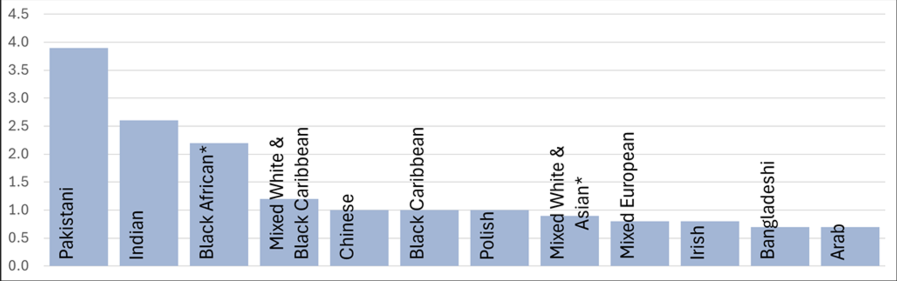
| Ethnic group | % |
|---|---|
| Pakistani | 3.9 |
| Indian | 2.6 |
| Black African | 2.2 |
| Mixed White and Black Caribbean | 1.2 |
| Chinese | 1 |
| Black Caribbean | 1 |
| Polish | 1 |
| Mixed white and Asian | 0.9 |
| Mixed European | 0.8 |
| Irish | 0.8 |
| Bangladeshi | 0.7 |
| Arab | 0.7 |
Census 2021
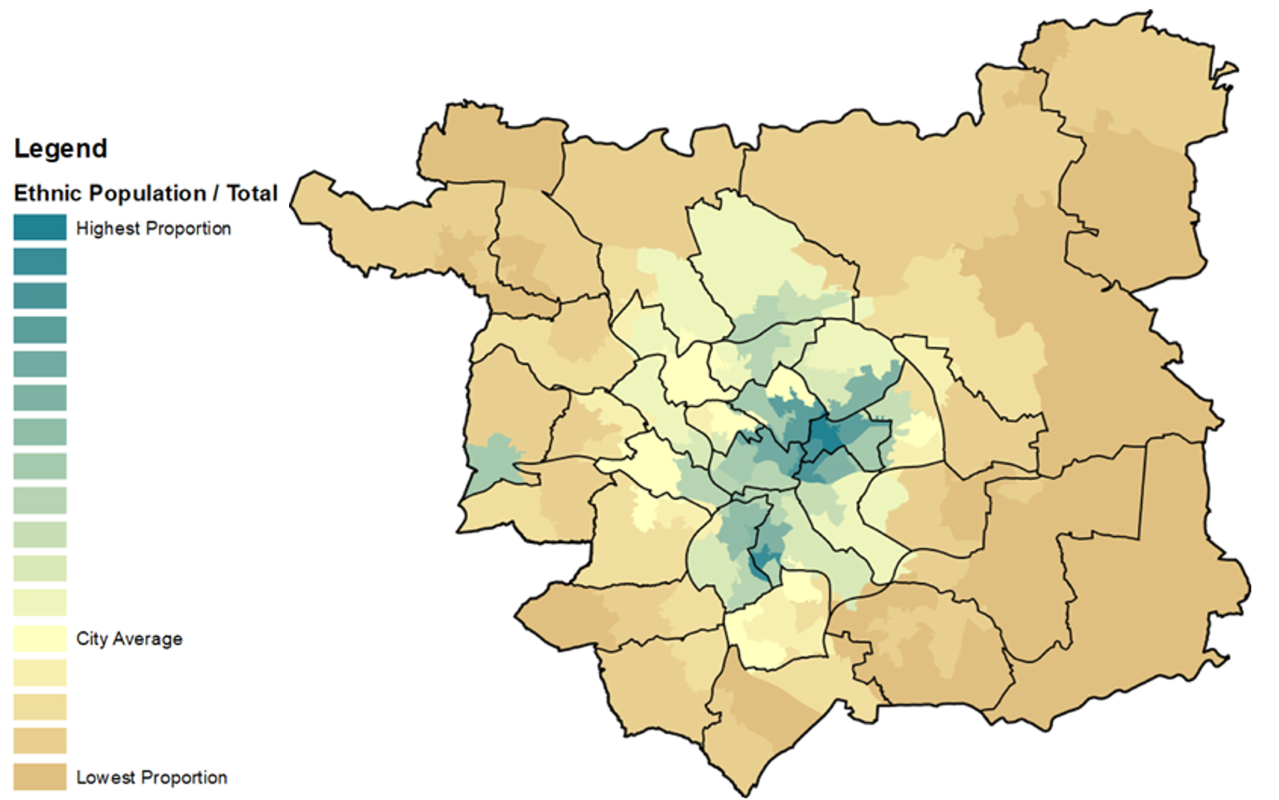
Census 2021: 12 largest ethnically diverse populations as a proportion of the total Leeds population.
National insurance number data
More recent changes to migration population trends can be understood using a range of datasets. The data from the Department of Work and Pensions for overseas nationals who successfully applied for a National Insurance Number (NINo). This dataset offers insight into new arrivals, who are individuals with the right to work or claim benefits in the UK typically need to obtain a NINo shortly after arrival.
It must be noted that there are several caveats to using NINo datasets. This data does not include those under the age of 16, people who do not have rights to work or claim benefits including students without rights to work, people seeking asylum, and those who may obtain a NINo outside of Leeds. It must also be noted people may obtain a NINo in Leeds and subsequently move to another city.
NINo data highlights between 2021 and 2025 (year ending December) 58,158 overseas nationals successfully applied for a NINo, inclusive of people who stay short and long term.
The highest number of applications were received in 2023 with 16,208 applications, this was an increase of 1,250 since the previous highest number of 14,958, which was recorded the year before.
National insurance applications to core cities by overseas nationals
Of the ten UK core cities, Leeds has received the fourth highest number of successful overseas nationals NINo applications since 2021, with Birmingham, Manchester and Glasgow ranking first, second and third respectfully. All the core cities appear in a list of the top 40 districts with larger numbers of overseas nationals applying for NINo. More than half of the remaining areas are greater London districts, with Bradford and Salford being the only other “Northern” districts to appear on the list outside of the core cities.
NINo applications to core cities 2021 to 2025
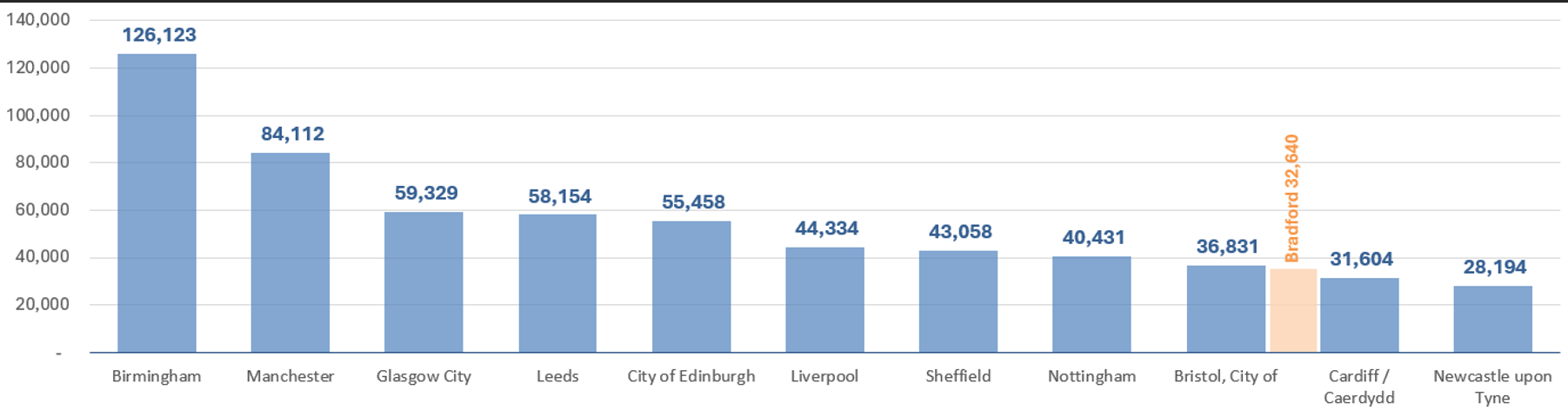
| Core cities | Overseas nationals |
|---|---|
| Birmingham | 126,123 |
| Manchester | 84,112 |
| Glasgow city | 58,329 |
| Leeds | 58,154 |
| City of Edinburgh | 55,458 |
| Liverpool | 44,334 |
| Sheffield | 43,058 |
| Nottingham | 40,431 |
| City of Bristol | 36,831 |
| Bradford | 32,640 |
| Cardiff/Caerdydd | 31,604 |
| Newcastle upon Tyne | 28,194 |
Bradford is not a core city, it has been included above as our closest neighbour within the top 40 districts appearing on the list.
Age and gender
The gender distribution among applicants is nearly balanced, with females representing 49.5% and males 52.1%. This parity suggests that migration related services and support should be designed to be inclusive and responsive to the needs of all genders.
The age profile reveals that the majority of applicants fall within the 18 to 34 age range, indicating a predominantly young adult demographic. This has implications for service planning, particularly in areas such as employment, education, housing, and mental health support. Tailoring interventions to meet the aspirations and challenges of younger people will be key to fostering long-term sense of connection and belonging.

| Age | Male | Female | Male % | Female % |
|---|---|---|---|---|
| Under 24 | 2,217 | 2,183 | 45.4% | 48.6% |
| 25 to 34 | 1,851 | 1,652 | 37.9% | 36.8% |
| 35 to 49 | 692 | 541 | 14.2% | 12% |
| 50 to 59 | 79 | 53 | 1.6% | 1.2% |
| 60 or over | 41 | 63 | 0.8% | 1.4% |
Top ten highest numbers of nationalities applying for NINo, with significant UK and global events
Between 2002 and 2025, migration to the UK has been shaped by a complex interplay of global crisis, regional conflicts, economic shifts and evolving domestic policy. This has significantly influenced migration patterns and National Insurance Number applications.
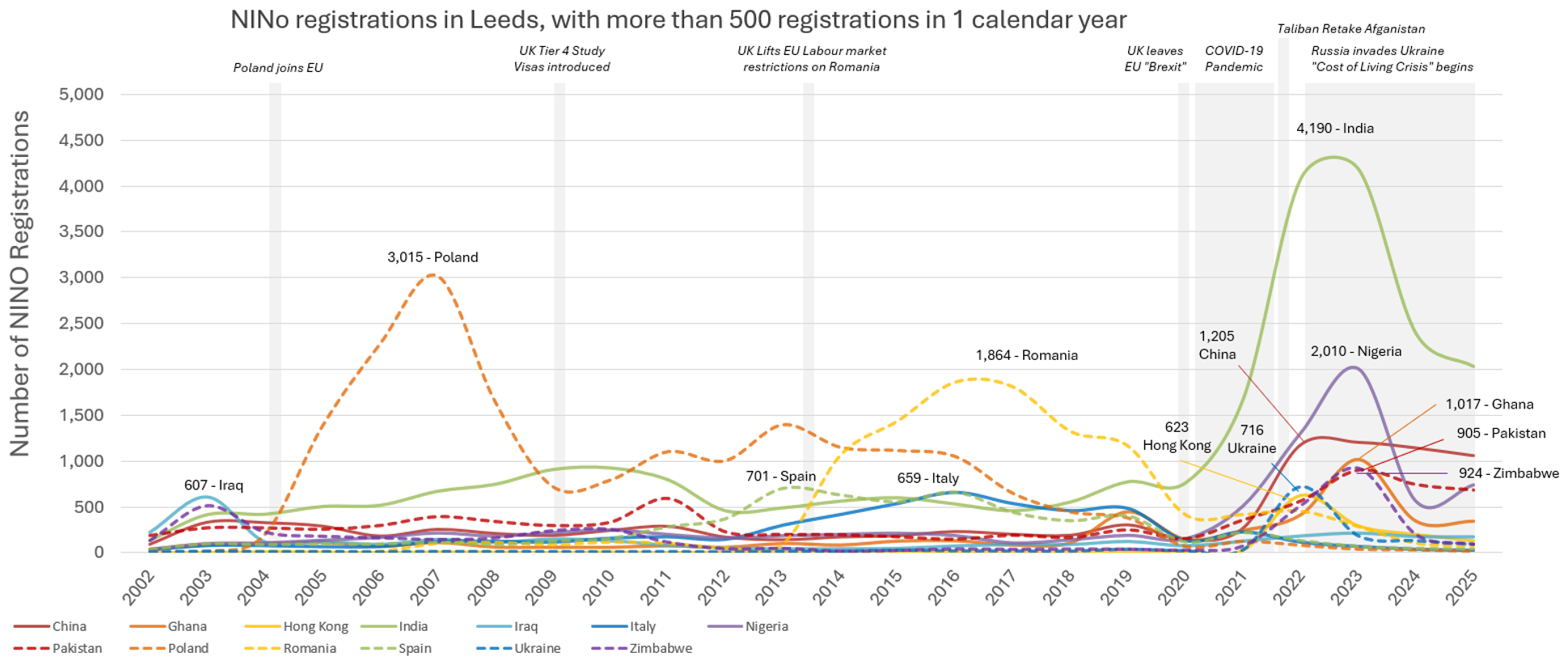
Between 2002 and 2025, the most frequent nationalities applying for NINos typically included: Poland, Romania, India, Pakistan, Nigeria, China, Bangladesh, Lithuania, Italy, and Spain. In more recent years, India and Pakistan have emerged as leading non-EU (non-European Union) sources of NINo registrations, particularly following the UK’s exit from the EU and the introduction of the points-based immigration system.
Applications from Polish and Romanian nationals, which had been high prior to the pandemic, have since declined significantly. This shift is likely influenced by a combination of factors including Brexit, the COVID-19 pandemic, and changes to visa regulations. Since 2020/21, the highest number of applications have come from India, Nigeria, China, Pakistan, and Ghana.
| Key global and UK events influencing trends | |
|---|---|
| 2004 EU enlargement |
The accession of 10 new countries, including Poland and Lithuania, led to a surge in NINO applications from Central and Eastern Europe. |
| 2007 EU expansion |
Romania and Bulgaria joined the EU, with transitional controls initially limiting but later increasing migration. |
| 2008 to 2009 Global Financial Crisis |
Economic instability prompted increased mobility, especially from Southern Europe |
| 2012 Health and Care Sector Demand |
Policy shifts and visa routes (such as Tier 2) encouraged skilled migration, particularly from India, Nigeria, and the Philippines. |
| 2015-2016 Refugee Crisis – UK Resettlement Schemes |
Conflicts in Syria, Eritrea, and Afghanistan contributed to humanitarian migration and in response to global humanitarian needs, the UK implemented various resettlement programmes, including the Vulnerable Persons Resettlement Scheme (VPRS) for Syrians and later schemes for Afghans and others. These initiatives contributed to a notable increase in NINO registrations among resettled individuals and families. |
| 2016 Brexit Referendum |
Triggered a spike in NINO registrations from EU nationals amid uncertainty over future rights. |
| 2018 Introduction of EU Settlement Scheme |
Encouraged EU citizens to formalize their status, influencing registration patterns. These events are reflected in the peaks and shifts in NINo registration data across the years. You can explore detailed figures and trends in the official DWP statistical release. |
| 2020 A new points-based framework |
Prioritised skills and salary thresholds, with a growing share of migrants now arriving from outside the EU. The UK’s introduction of the Tier 2 visa system was later rebranded as the Skilled Worker visa. Amid acute staffing shortages, particularly in health and social care, these sectors emerged as key channels for overseas recruitment. Workers from countries such as Nigeria, India, and the Philippines formed a substantial proportion of new arrivals, a trend further accelerated by the heightened demand brought on by the COVID-19 pandemic and its aftermath. |
| 2021-2022 Humanitarian routes | In response to unfolding humanitarian crises, the UK launched targeted schemes, including the Hong Kong BN(O) visa and the Ukraine Family Scheme. These programmes added new dynamics to the migration picture and reflected evolving public sentiment and policy. |
| 2025 | The continued rise in applications from countries like Nigeria and the Philippines reflects sustained recruitment in health and social care. However, proposed restrictions on overseas recruitment in care work and increased salary thresholds signal another shift, likely to influence future NINO registration patterns. |
People seeking asylum
In addition to economic and skilled migration, the UK has seen a growth in humanitarian migration. People seeking asylum remain an important part of the broader migration picture. As of December 2025, 1,772 individuals living in Leeds were receiving support from the Home Office, reflecting the city's ongoing commitment to supporting people seeking asylum under national dispersal policies.
International students
The international student's population continues to grow and enrich local economies and contribute to cultural diversity, particularly in university cities like Leeds. In the academic year 2022/23 there were 17,700 international students enrolled across higher education providers in Leeds; 1,235 from the European Union and 16,465 from non-EU countries.
Higher education student enrolments
| Academic year 2022/23 | Total UK | European Union | Non-European Union | Total |
|---|---|---|---|---|
| Leeds Arts University | 2,025 | 35 | 185 | 2,250 |
| Leeds Beckett University | 18,945 | 225 | 4,400 | 23,580 |
| Leeds Conservatoire | 1,340 | 35 | 80 | 1,455 |
| The University of Leeds | 24,840 | 850 | 11,720 | 37,410 |
| Leeds Trinity University | 13,545 | 40 | 40 | 13,630 |
| College of Legal Practice Limited | 455 | 0 | 15 | 470 |
| Northern School of Contemporary Dance | 190 | 50 | 25 | 270 |
| Grand Total | 61,340 | 1,235 | 16,465 | 79,065 |
Data Sources
To support evidence-based decision making and deepen understanding of migration in Leeds, the following data sources are available:
- Find more information about Leeds Observatory - A comprehensive platform offering local data and intelligence across a range of themes.
- Find more information about Migration Yorkshire Statistics - Regional migration data and analysis.
- Leeds migration strategy (PDF, 797KB)


