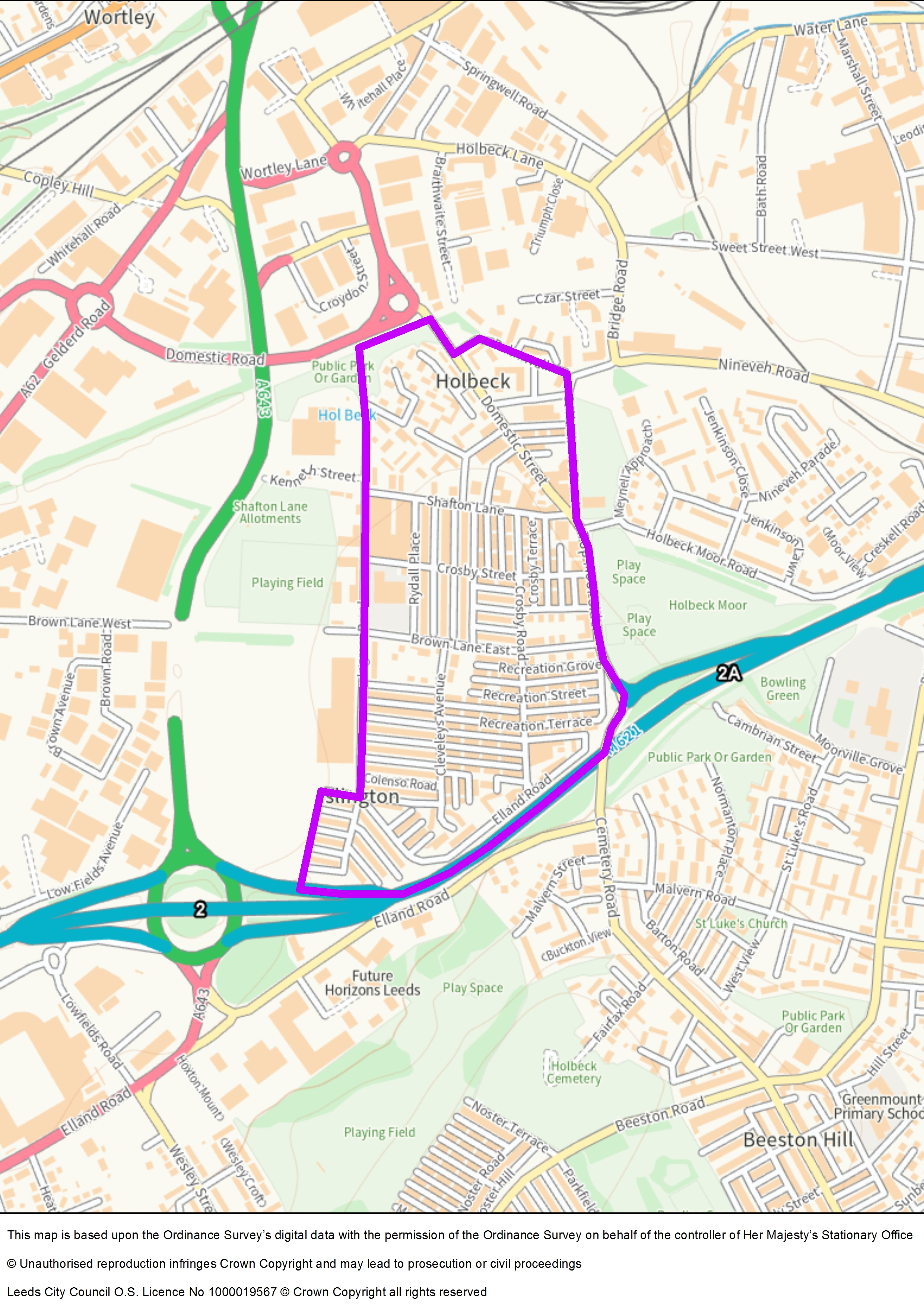
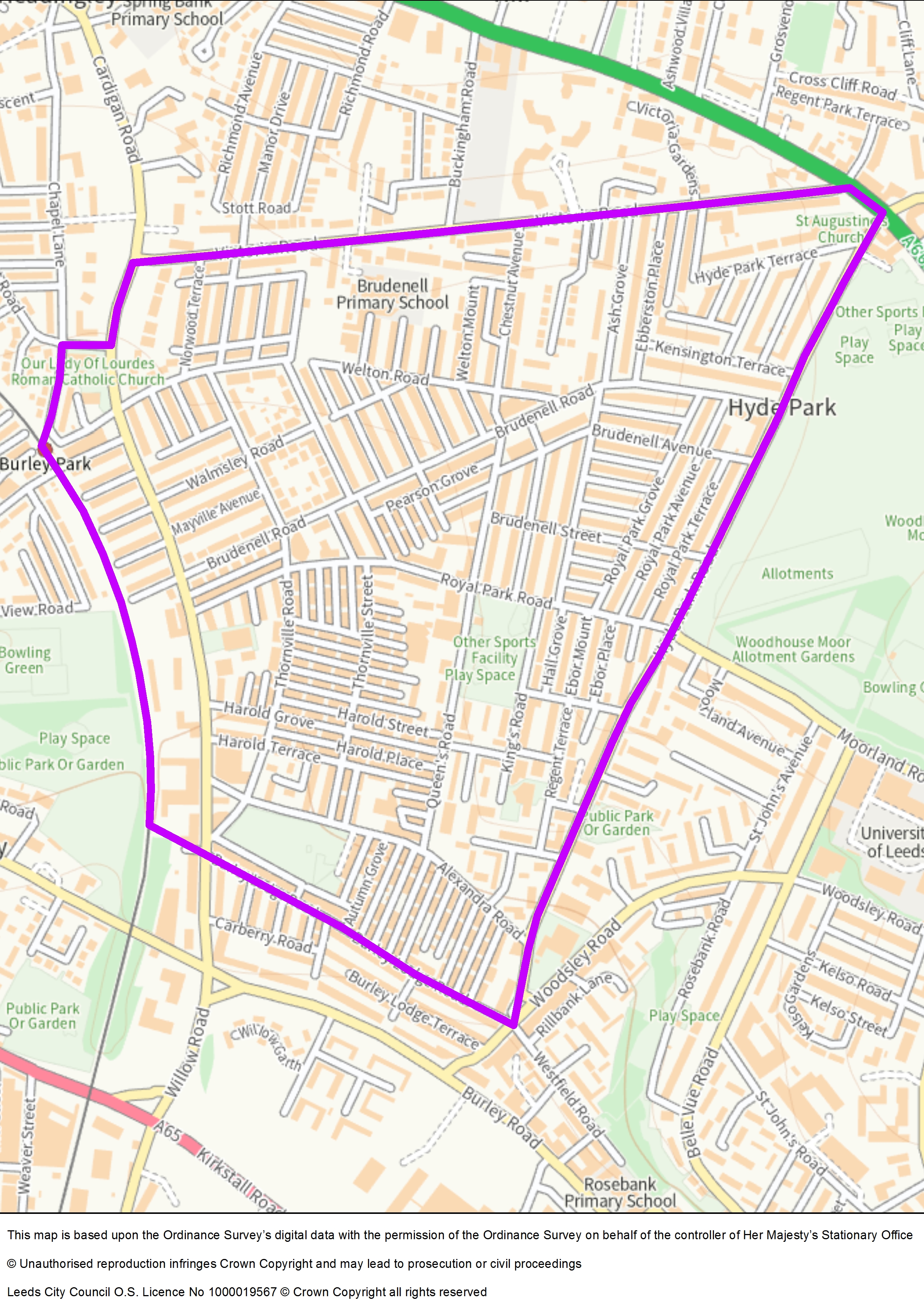
This summary is intended to be a much shorter summary of the map, policy and evidence for each area to aid the applicant and their representatives, people making representations and responsible authorities. The summaries are not intended to replace the full evidence document, which is available from Entertainment Licensing, by email.
Area overview
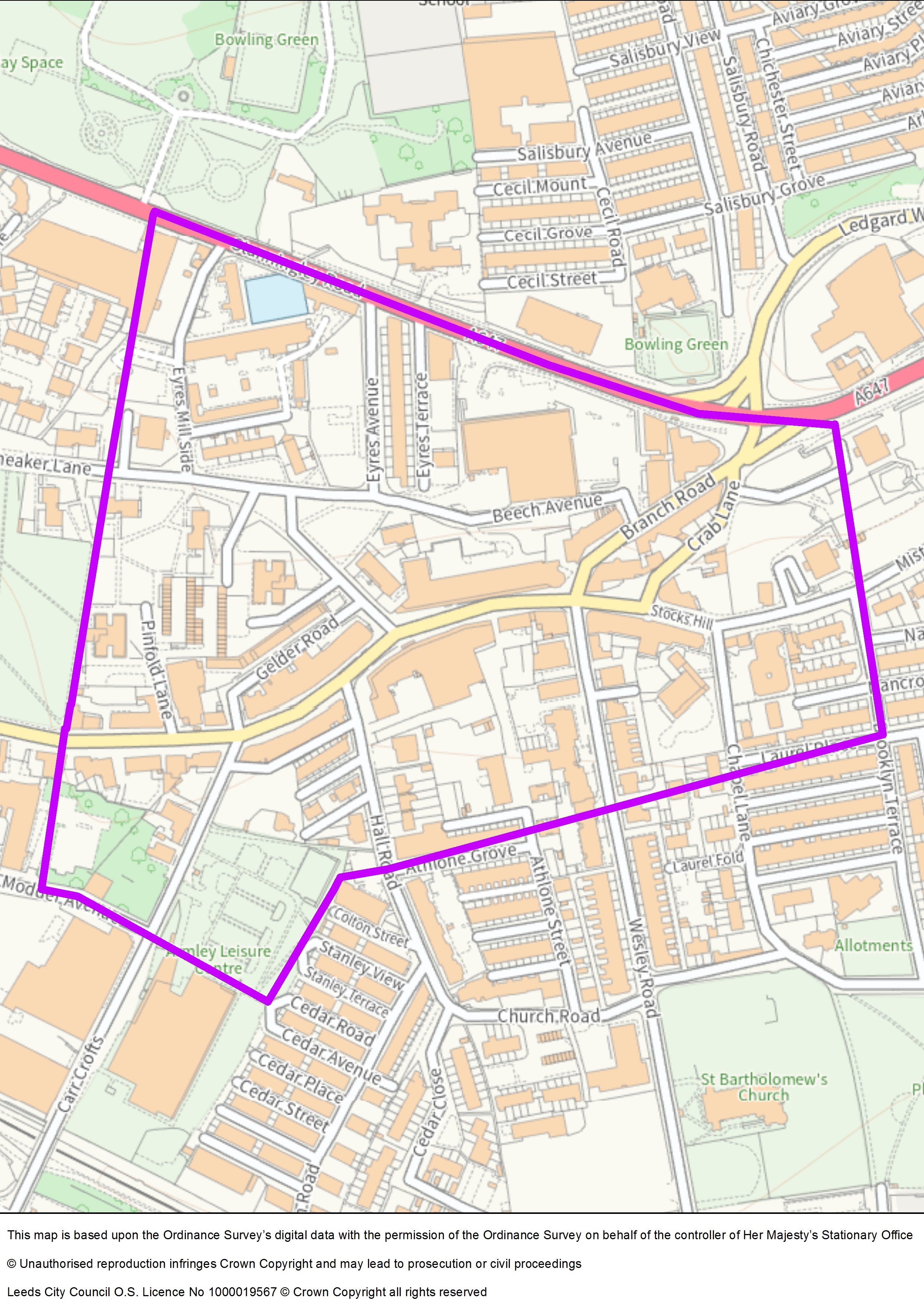
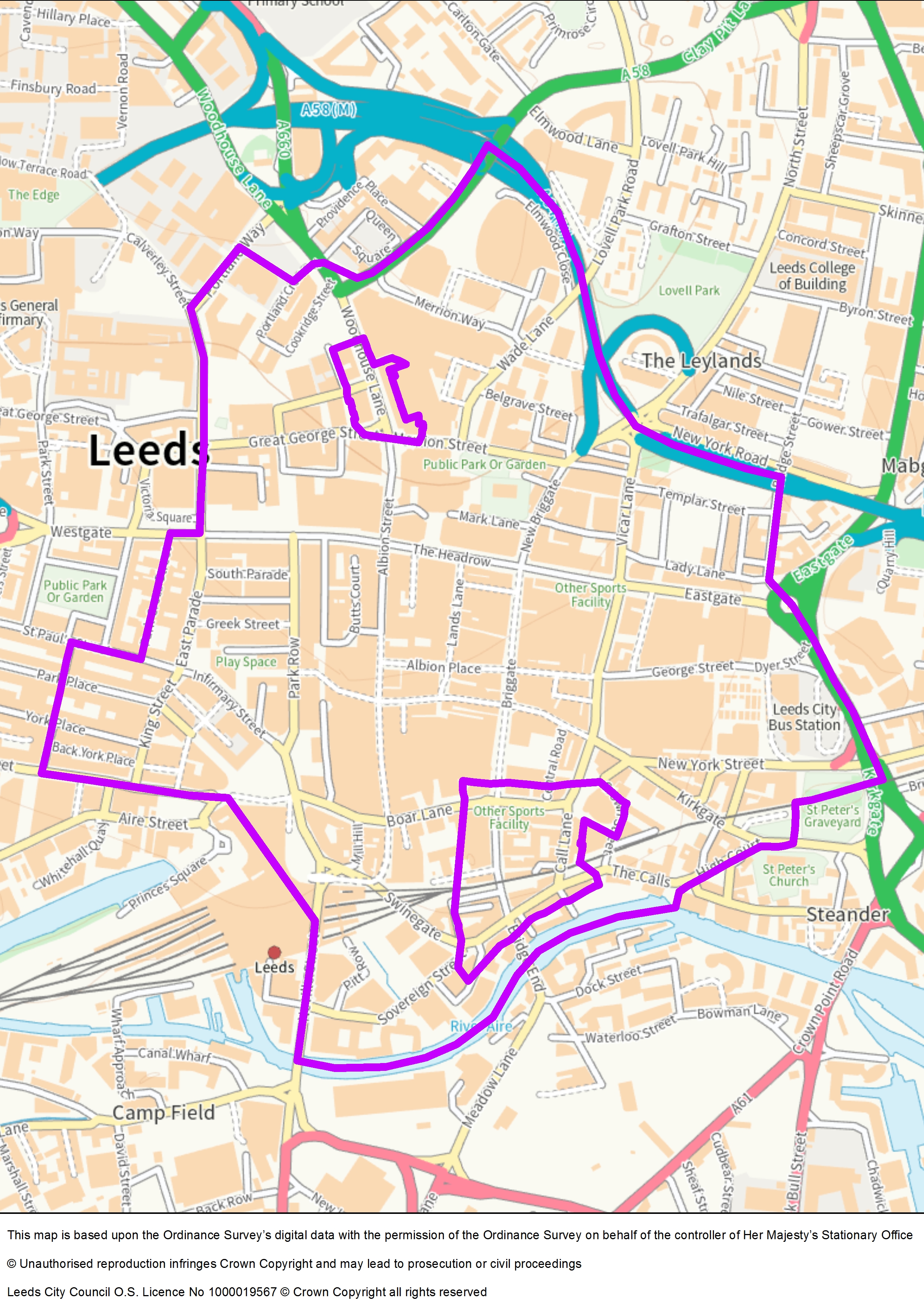
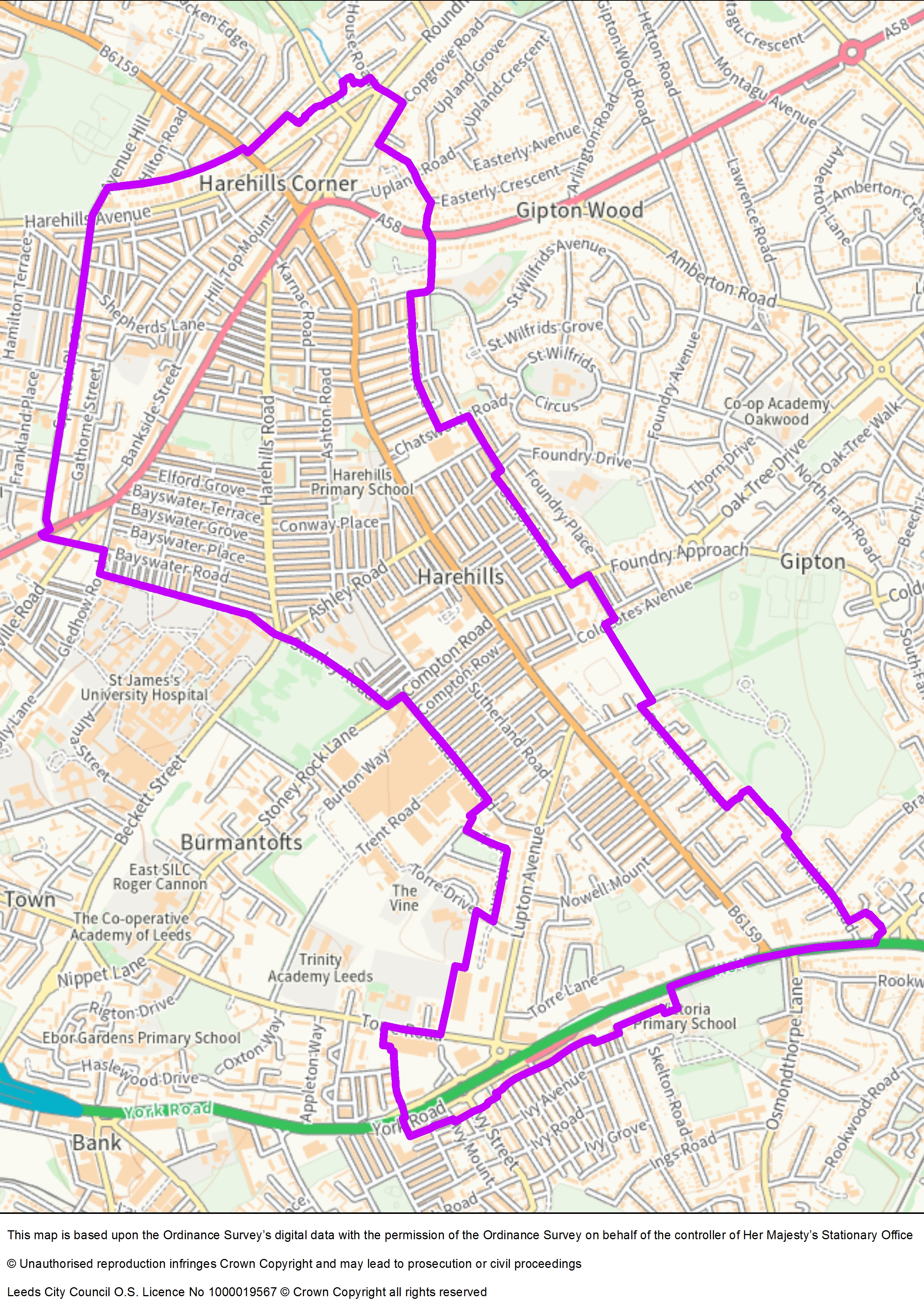
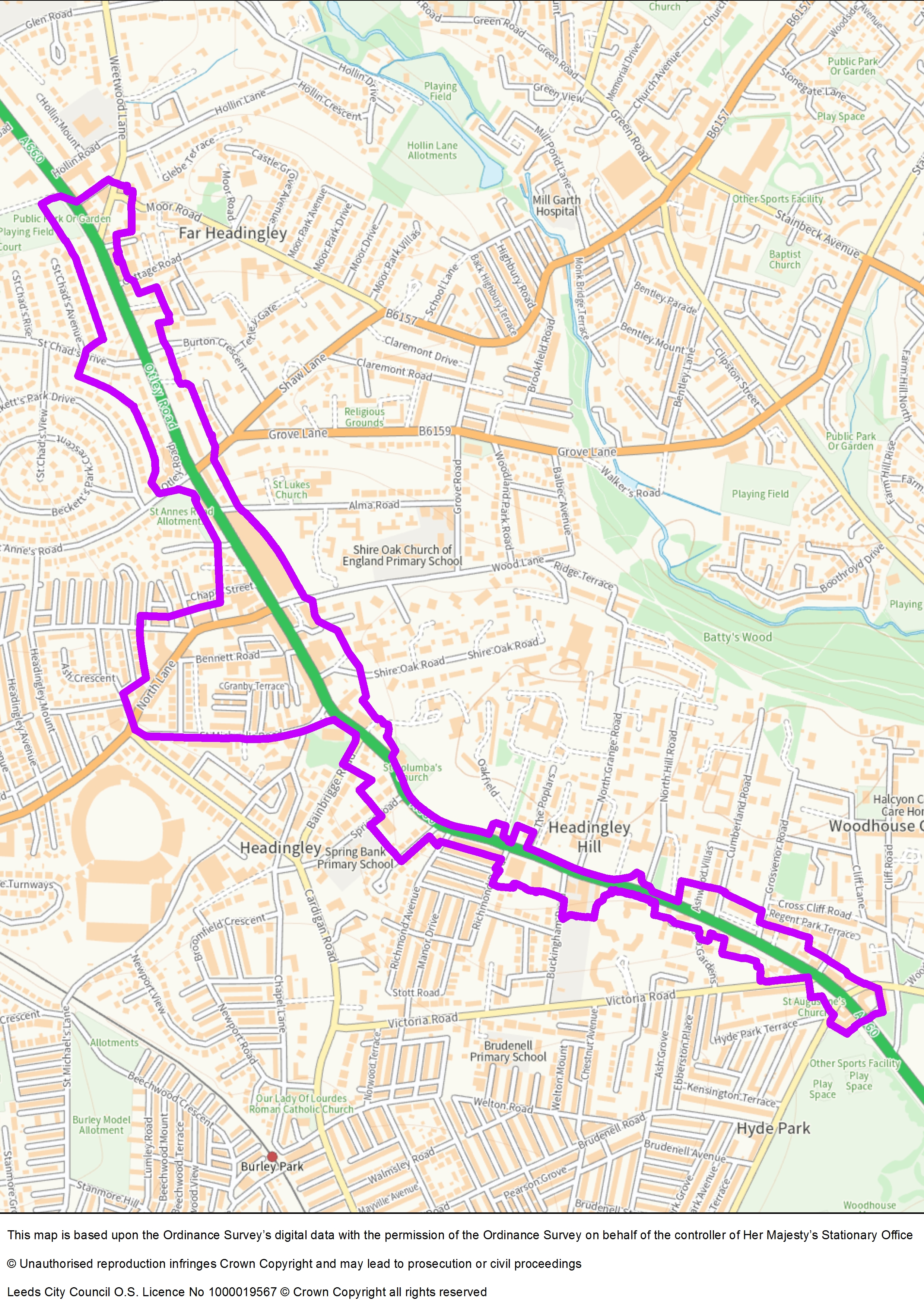
The area covered by this cumulative impact assessment and policy is shown in the map.
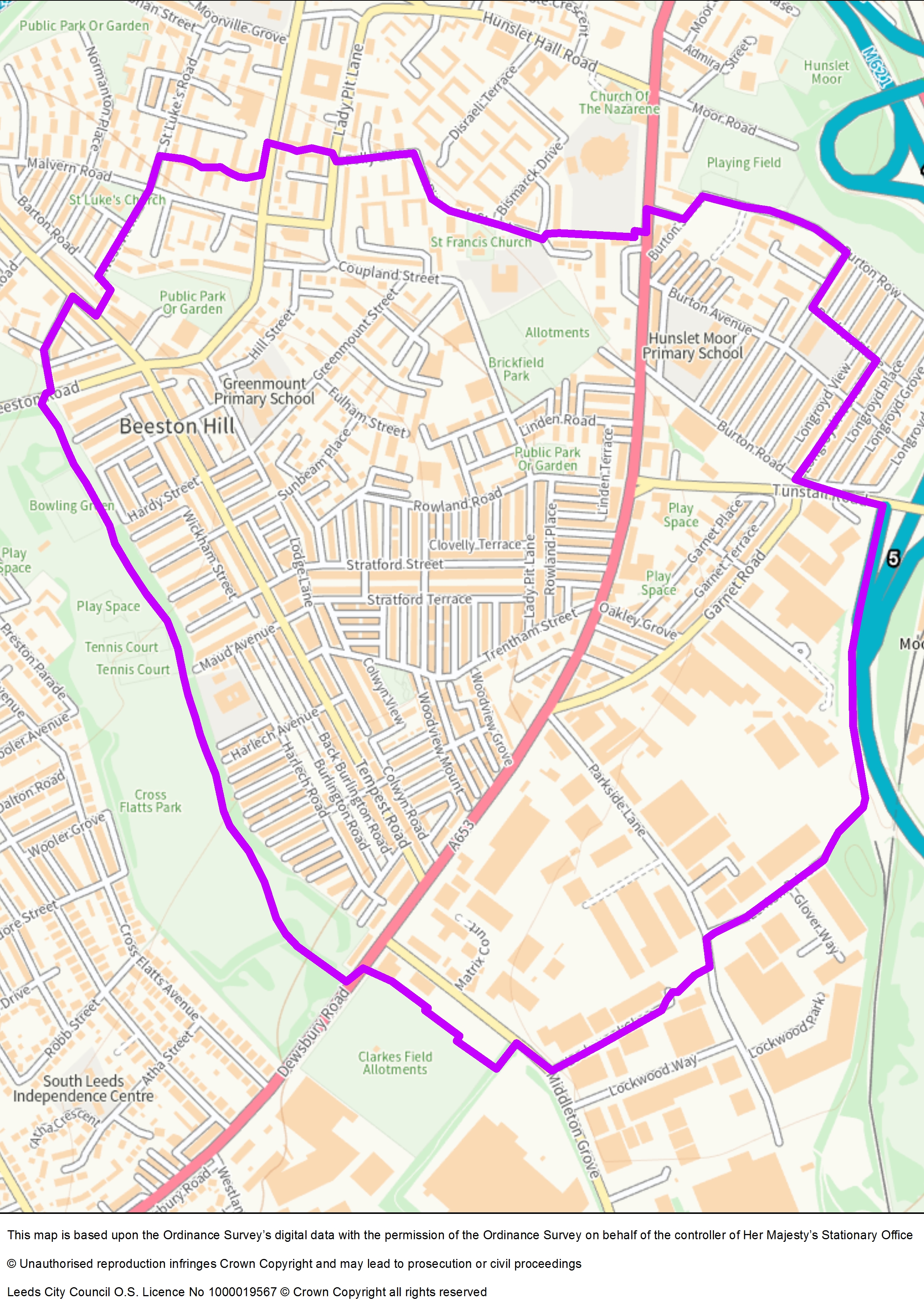
Beeston is a dense urban neighbourhood with numerous small, independent convenience and takeaway premises (along Dewsbury Road/Tempest/Beeston Road), alongside larger retailers (Tesco, ALDI, Iceland). Recent years have seen rising licensing activity in deprived areas.
Multi‑agency problem‑solving (May 2023) addresses street drinking, drug use/dealing, begging, and sex work (especially around Beeston Hill and Holbeck Priority Neighbourhoods). Challenges include groups outside the Community Hub drinking/urinating, rough sleeping at large retailers, prolific shoplifting, and sale of single cans by some off‑licences.
Policy
Paragraphs 7.35 to 7.37 of the Leeds City Council Statement of Licensing Policy state:
7.35 The council has assessed crime statistics, alcohol risk data and licensing statistics for the area known as Beeston. Comments provided by partners, residents and businesses in the area show that this area is suffering the cumulative impact of off-licensed premises and late-night refreshment premises.
7.36 In this area the nature of the problems is alcohol related crime and nuisance, specifically anti-social behaviour of people who drink alcohol in the street, whether that be due to alcohol dependency or cultural social drinking. The area experiences litter from take away premises.
7.37 The policy in this area is that it would be inconsistent with the council’s duty to promote the licensing objectives to grant new and variation applications for any premises licence which seeks off sales or late night refreshment to operate in the area known as Dewsbury Road, but which includes Dewsbury Road, up to Cross Flatts Park, Tempest Road and Beeston Road.
Quantitative evidence – alcohol licensing data matrix (MSOA ranking and indicators)
The CIA spans two very high‑risk MSOAs: Beeston Hill and Hunslet Moor (rank 7/107), and Cross Flatts Park and Garnets (rank 6/107); both show very high scores for alcohol‑flagged crime/violent crime, drunk and disorderly, noise and litter complaints, deprivation, and vulnerability of children (high under‑16 population; looked‑after children; NEET).
Beeston East (south‑west) ranks 33/107 (medium) yet still exhibits very high off‑licence density and high drunk & disorderly, noise, and litter, plus indicators of vulnerable children.
Quantitative evidence – police crime and nuisance analysis (WYP; 1 Jun 2021–1 Jun 2024)
Zone One (Beeston Hill): Overall crime ↓16% over 3 years, with reductions in Drunk & Disorderly, Violence with Injury, and Public Order; however, Robbery and Theft from Person have risen. Peak offending windows are daytime 15:00–19:00. Streets with notable issues include Dewsbury Road (crime fluctuating; net ↓9% from 21/22 to 23/24) and Tempest Road (↑6% overall). Bismarck Street showed a 106% overall increase due to neighbour disputes/domestics.
Nuisance ASB (Zone One): Overall down 18%; Youth‑related down 35%, while Nuisance Motorcycle/Quadbike up 81%; Fireworks/Snowballing spiked then fell; Lodge Lane up 317% nuisance (motorbike noise).
Zones Two and Three (south of Cross Flatts): Crime down 21% overall with fluctuating street‑level patterns; Rape reported up 600%, though only one stranger case involving a pub meeting was noted; Robbery doubled compared to 21/22; Theft from Person decreased markedly. Dewsbury Road remains the top crime and ASB street because of its length and commercial intensity.
Qualitative evidence (agencies, schools, residents, councillors)
Agencies report unsafe environments near the Community Hub and schools, aggressive/intimidating behaviours inside and outside public facilities, large volumes of alcohol container litter, elderly residents frightened by early‑morning off‑sales, concerns about 24‑hour off‑licences drawing street drinkers and underreporting due to fear.
Schools and family services report daily clearance of broken bottles, needles, used condoms, exposure of children/parents to drunken/abusive behaviour, proximity of alcohol outlets to nurseries and community centres.
Ward councillors report strong evidence of deprivation‑linked alcohol harms, groups street drinking, begging at major retailers, declining liveability, and out‑migration intent. A CIA is viewed as key to controlling supply while other interventions proceed.
Conclusion
The policy in this area is that:
It would be inconsistent with the council’s duty to promote the licensing objectives to grant new and variation applications for any premises licence which seeks to sell alcohol for consumption off the premises, or late-night refreshment to operate in the area known as Dewsbury Road, but which includes Dewsbury Road up to Cross Flatts Park, Tempest Road and Beeston Road.
In more deprived areas, the reporting of crime is historically lower than in more affluent areas even though Safer Stronger Communities, West Yorkshire Police and resident organisations do encourage the reporting of crime. In areas such as Beeston Hill, it is useful to look at the crime statistics not as a specific number, but as representative of the issues in each of the streets, and the most prevalent types of crimes.
Taking into consideration all the evidence, including the qualitative evidence provided by partners agencies and residents, the main crimes this area is suffering from are public order offences, violence with injury and theft.
Dewsbury Road has, by far, the greatest crime. Nearly all the agencies report issues with people who drink in the street in groups. As outlets in this area sell alcohol early in the morning until late at night, a culture of street drinking has developed. The evidence from the Community Hub Manager reports aggressive and violent behaviours being displayed by people using their facilities, and the excessive drinking is happening outside their Hub, with people sitting and drinking all day.
The Crime Reduction Officer reports residents’ concerns about shops selling alcohol early in the day and the impact this has on people. The Cleaner Neighbourhoods Team collect large amounts of cans and glass bottles. The primary schools report that their pupils, staff and parents witness people being drunk and abusive and displaying highly inappropriate behaviours. The ward councillors link the increase in licensed premises with an increase in people who drink in the street, with that now being a common sight.
The areas where people report problems are around Dewsbury Road and Tempest Road.
With the evidence provided by residents and people working in the area, which is confirmed by the crime statistics and the Health Data Matrix data, the council would consider that the area shown within the purple boundary on the map as suffering from the cumulative impact of licensed premises in the area. This is having a negative impact on all four licensing objectives, but especially crime and disorder, public nuisance and the protection of children from harm.
This assessment is of evidence provided by Public Health through the Alcohol Licensing Data Matrix, West Yorkshire Police through updated crime statistics, as well as additional information provided by residents and people working in the area as well as comments received during the public consultation.
The area to the south of Cross Flatts Park, known as Beeston/Beeston Village/Parkside and Cross Flatts will be kept under review. Should the issues being experienced in Beeston Hill displace to this area, evidence will be gathered, and this area assessed for cumulative impact. In any case this area will be included in the three-yearly review of Beeston Hill. This assessment has also considered the area to the south of Cross Flatts Park. The evidence of problems in this area is not as strong, but the concern that there may be displacement of licences into this area should a cumulative impact area be put in place further north are understandable.
Any application received which seeks off sales of alcohol or late-night refreshment at any time can expect to receive representations from West Yorkshire Police and the Licensing Authority and applicants should consider potential cumulative impact issues when setting out the steps that will be taken to promote the licensing objectives. Applications will normally be refused unless the applicant can demonstrate that the operation of the premises will be unlikely to add to the cumulative impact.